A condo owner at 1 Landmark Square in Port Chester had lived in his unit for roughly a quarter century without incident. Then, around 2012, buyers and refinancing owners in his building started getting turned down by banks. The reason had nothing to do with credit or income. The village's building department had told lenders that his unit, and the building itself, lacked a valid Certificate of Occupancy. Transactions that had closed without a hitch for twenty-five years suddenly could not close at all.
That story is over a decade old, but the pattern behind it never left Port Chester's housing stock. It's still visible today, sitting in plain text on active listings for two- and three-family properties, where sellers routinely disclose that "municipal records are different from how the property is currently set up." That single sentence is the real risk in a Port Chester multi-family purchase. Not the asking price, not the rent roll, not the cap rate. Whether the number of legal units on file with the village matches the number of units a buyer is actually paying for.
Two things are converging right now to make that risk sharper than it's been in years. The village just reinforced a rental registration law with a compliance deadline landing in about seven weeks. And a wave of outside redevelopment capital is pulling more buyer attention toward Port Chester's older multi-family stock than it's seen in a long time. Anyone buying or selling one of these properties this fall is stepping into that overlap.
What the mismatch actually looks like on paper
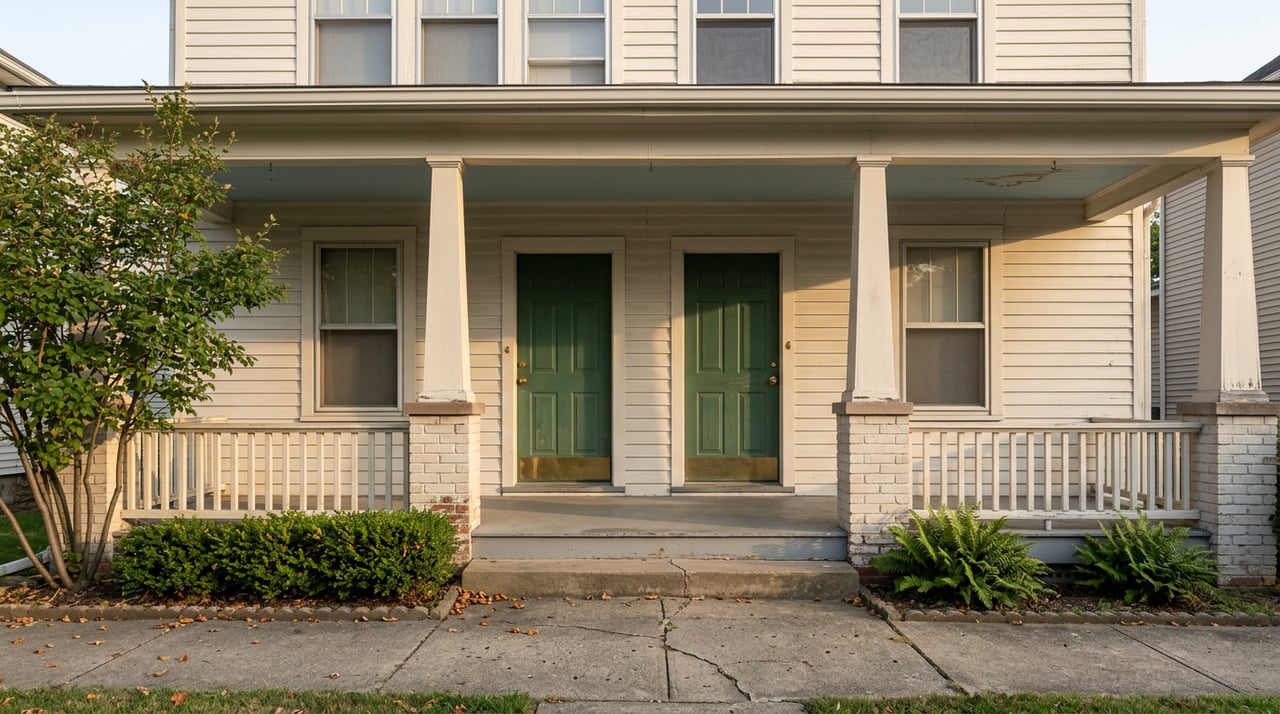
Port Chester's housing stock is full of buildings that were converted, subdivided, or expanded decades ago without every step of that work being closed out with the village. A basement finished as an in-law suite. A two-family that quietly became a three-family. An attic walk-up nobody bothered to permit. None of this is unusual for an older industrial village, and much of it was legal when it was done. The problem shows up later, when a sale or a refinance forces someone to prove, on paper, what's actually inside the walls.
Current listings make the pattern easy to spot. One active multi-family listing this year describes a six-unit, all-stone building where "municipal records are different from how the property is currently set up" and specifies that the village's authorized use does not match the number of units being marketed. Other listings lean on the word "legal" as a selling point, three-family, legally, or two-family, currently authorized, language that only exists because so many comparable properties in the village can't say the same thing. A buyer who skims past that phrasing is skimming past the one detail that determines whether their lender will fund the deal at all.
Port Chester already lived through this once
The village's response to widespread illegal apartments in the early 2010s was an amnesty program: come forward, disclose an over-occupied building, and avoid the fines that would otherwise apply, in exchange for bringing the unit count back down to what the Certificate of Occupancy allowed. Roughly 3 to 4 percent of Port Chester homeowners applied, about 400 owners, a number village officials said was double the typical participation rate for that kind of program elsewhere.
The program also caught people who weren't slumlords at all. Condo owners like the one at 1 Landmark Square found themselves needing decades-old building permits and electrical records to satisfy inspectors, sometimes for renovations completed by a previous owner they'd never met. Residents complained that the target keeps moving, meaning each round of inspection turned up a new item to resolve before a CO could be issued. Village staff running the program put it plainly at the time: the goal was reducing overcrowding and illegal housing, not punishing anyone, but the compliance burden landed on current owners regardless of who created the original violation.
That episode matters today for one reason. It shows that Port Chester's code enforcement apparatus is willing and able to freeze real estate transactions across an entire building, not just flag a single unit, when the paperwork doesn't match reality. The mechanism that stalled sales at 1 Landmark Square still exists. It just hasn't been tested at scale in a while.
The paperwork problem is about to get more visible, not less
That's changing this fall. Port Chester's Rental Registry Law, codified as Chapter 248 of the village code, requires every non-owner-occupied two-family dwelling to register with the Department of Code Enforcement and submit to a property maintenance inspection at intervals of no more than three years. Registration forms and exemption affidavits for the current cycle are due no later than October 1, 2026, and owners must notify the department within 30 days of any change in ownership.
The village reinforced this requirement in a public notice this spring, stating plainly that non-owner-occupied two-family property owners are officially on notice that compliance is expected. Owners who decline an inspection can request certification instead from a New York State certified code official, but if they refuse both, the village can apply for a search warrant to inspect the property anyway.
None of this is a Certificate of Occupancy audit by name. But a property maintenance inspection triggered by the rental registry is exactly the kind of visit that surfaces the same discrepancies the 2013 amnesty program was built to catch: more units than the CO allows, work done without a permit, occupancy that doesn't match what's on file. For anyone selling a non-owner-occupied two-family this fall, the inspection that's about to happen under Chapter 248 and the inspection a buyer's lender will eventually require are asking the same underlying question.
Why outside capital is paying attention to Port Chester multi-families right now
The timing isn't coincidental. Port Chester is in the middle of the largest wave of redevelopment investment it's seen in years. In April 2026, the state broke ground on Westchester Crossing, a $65 million project on the former United Hospital site that will deliver 957 new housing units, including 105 affordable homes, backed in part by New York's Pro-Housing Community program. The village's waterfront promenade restoration began construction on March 10, 2026, the first phase of a planned pedestrian "LOOP" that will eventually connect the waterfront, the train station, and the Capital Theatre, a $6 million project that marks the final phase of waterfront revitalization work that began in 2021.
Set against that backdrop, the existing multi-family stock looks scarce. In a mid-June 2026 snapshot of the local market, only five multi-family homes were listed for sale in Port Chester, at a median asking price of $849,000, alongside 14 condos and a single townhouse. Fifteen homes closed across the village in the month before that snapshot was taken. For comparison, the village's overall median home listing price in July 2026 was $337,000, with homes spending a median of 45 days on the market. Multi-family properties are trading at more than double the village-wide median, which means the buyers competing for them are underwriting a materially larger loan against a smaller, harder-to-verify pool of legal rental income.
That's the part a rising sale price obscures. A buyer paying $849,000 for a three-family is pricing in three legal, permitted rental units. If village records only support two, the appraisal, the loan amount, and the buyer's actual return all shrink at once, and they usually find out during underwriting rather than before they wrote the offer.
| Segment | Timeframe | Median price | Notes |
|---|---|---|---|
| Multi-family listings | Mid-June 2026 | $849,000 | 5 active listings |
| Village-wide, all types | July 2026 | $337,000 | 45 days on market |
What buyers should pull before writing an offer
- The property's actual Certificate of Occupancy or Certificate of Compliance, matched against the number of units being marketed, not the number of kitchens a listing photo implies
- Whether the building is registered under Chapter 248's rental registry, and if so, the date and outcome of its most recent inspection
- Any open building permits or unresolved code violations tied to the address, since the village has shown it will hold up a closing over unresolved paperwork rather than issue a CO with open items
- Confirmation from the lender, in writing, of how many legal units the appraisal is based on, before removing a financing contingency
What sellers should resolve before listing
Owners of non-owner-occupied two-family homes should confirm their rental registry status well ahead of the October 1 deadline rather than discovering a lapse mid-contract. If a unit count on the ground doesn't match the CO, it's worth pricing out what it costs to bring the building back into compliance, whether that means pulling a permit for work done years ago or converting a unit back down, against what it costs in lost buyers and stalled financing if that mismatch surfaces during someone else's mortgage underwriting instead.
Common questions
Does a two-family need to register if the owner lives in one unit? Chapter 248's registry applies specifically to non-owner-occupied two-family dwellings. Owner-occupied two-families fall outside this particular requirement, though a valid Certificate of Occupancy still matters for any future sale.
What if the CO predates the current code? Buildings issued a CO under an older code version generally remain valid for the work that was inspected at the time. The complication comes from unpermitted changes made after that CO was issued, additions, conversions, or finished spaces that were never inspected, which is what tends to surface during a rental registry or lending inspection today.
Will the Westchester Crossing or waterfront projects change zoning near my property? Those specific projects involve their own site plans and are not, on their own, evidence of a zoning change to unrelated parcels. Anyone with questions about how nearby redevelopment affects a specific property's zoning should confirm directly with the village rather than assume based on proximity.
Multi-family property in Port Chester rewards owners who treat the paperwork as seriously as the rent roll. If you're weighing a sale this fall, or trying to figure out what a two- or three-family in the village is actually worth once its legal status is accounted for, Andrew Rogovic at RyebrookRealtor.com can walk through what the village's records show for your specific address. Request a Free Home Valuation to start with a clear picture of where your property stands.