Thinking about selling in Scarsdale and not sure where to price your home? In a market where many buyers value commute convenience and updated homes, a smart pricing plan does more than set a number. It sets your timeline, your negotiation power, and your final net. In this guide, you will see how experienced Scarsdale listing agents build a finance-minded strategy that balances data, condition, and market speed so you can price with confidence. Let’s dive in.
What smart pricing means in Scarsdale
Scarsdale is one of Westchester’s higher-priced, commuter-friendly single-family markets. Demand is shaped by frequent Harlem Line train service to Manhattan and buyer research into local schools. Many buyers also watch mortgage rates, which shift affordability and urgency. You want a pricing plan that reads these signals and moves with them, not against them.
Tight supply across Westchester in late 2024 and into 2025 has kept well-presented homes moving quickly in many segments. Local MLS and association reports point to lean months of supply in several price bands. You can scan recent Westchester and town-level trends in the HGAR market summaries. The takeaway is simple: in Scarsdale, a data-backed price that matches buyer expectations often earns stronger showing traffic and cleaner offers.
Start with a rigorous CMA
A Comparative Market Analysis (CMA) is the foundation. Strong CMAs focus on:
- Closed sales first. Final sale prices carry the most weight.
- Pending and active listings to gauge current competition.
- Price-per-square-foot patterns and price bands that reflect how buyers shop.
- Local intel from recent deals to learn if homes drew multiple offers or concessions.
A seasoned agent in Scarsdale will present a defensible price range, not a single number, then recommend an entry price that supports your timeline and marketing plan. Adjustments for differences in size, beds and baths, finished basements, lot size, and major systems should follow appraisal logic and be supported with market evidence. For methodology standards, the Appraisal Institute’s guidance notes are a useful reference.
Selecting the right comps in Scarsdale
Micro-markets matter. Agents filter for:
- Geography. Compare inside the same neighborhood or elementary school zone when possible because these lines often create price clusters.
- Property type. Single-family should be compared with single-family.
- Time window. In active segments, 3 to 6 months is ideal. If inventory is thin, stretch to 6 to 12 months and apply time adjustments.
Public site medians can vary because some sources use the 10583 ZIP while others focus on the Village, and some include all property types. An MLS-based CMA is the right tool for setting your list price.
Building adjustments that hold up
Adjustments should reflect what buyers have actually paid in Scarsdale, not what improvements cost. When older comps are used, agents document time adjustments tied to local price trends. The FHFA’s analysis of time adjustments highlights why clear support is important.
Read market velocity like a pro
Market velocity shows how fast buyers are moving. Two simple metrics guide pricing decisions:
- Days on Market (DOM). How long it takes for a listing to go under contract.
- Months of supply. Active listings divided by average monthly sales. Lower supply favors sellers.
If early showings are weak relative to neighborhood norms, a measured price or marketing adjustment is often better than a deep cut. If similar homes are selling quickly with multiple offers, your strategy may allow a slightly more assertive entry price. You can track broader context in the HGAR market summaries, then calibrate to your exact micro-market once your listing is live.
Price for condition and updates
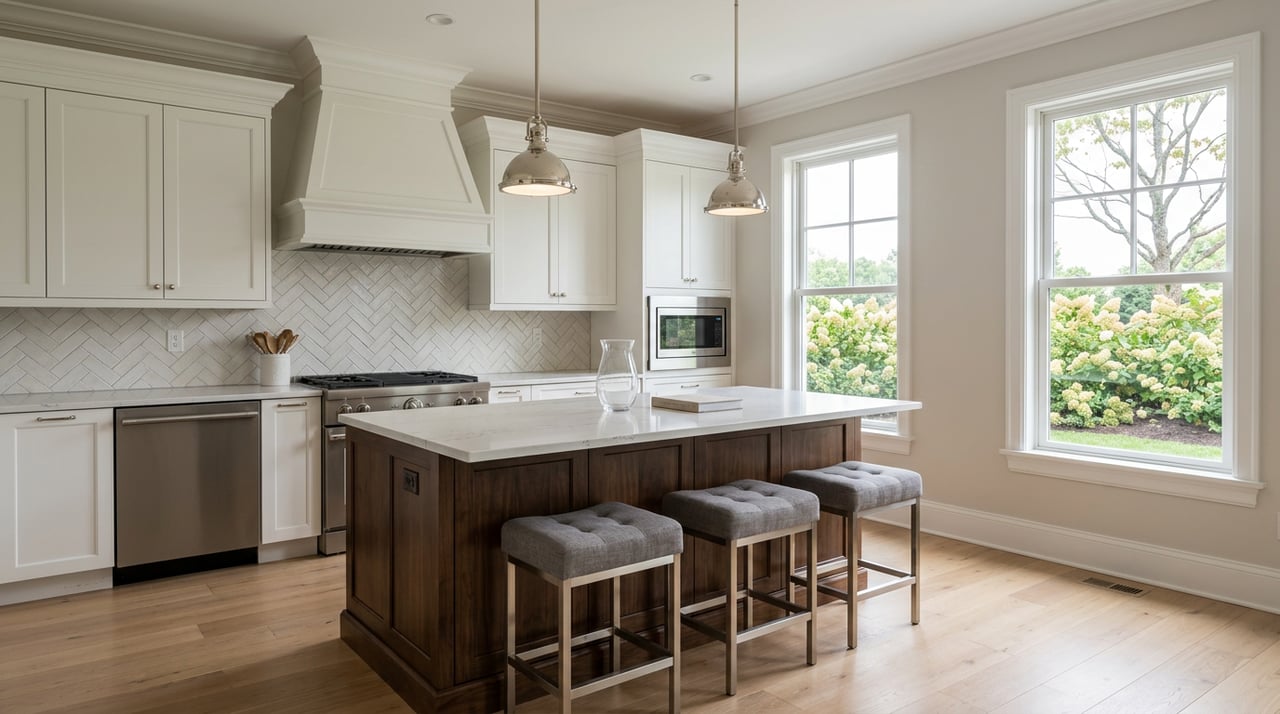
In Scarsdale, many buyers want move-in condition. Updated kitchens and baths, solid mechanicals, and a finished lower level tend to lift demand. Dated systems or half-finished projects usually slow activity and raise the odds of concessions. Regional industry coverage often shows that targeted, well-chosen updates have stronger resale impact than overhauls that outpace the neighborhood. For broader context on resale value conversations and market behavior, see coverage in the New York Real Estate Journal.
How do agents convert improvements into price? Two common approaches are dollar adjustments or price-per-square-foot differentials. The sound approach is to base these on paired sales rather than adding full project costs. Appraisal practice favors adjustments backed by market evidence. The Appraisal Institute’s guidance notes outline that principle.
Micro-markets inside Scarsdale
Scarsdale is not one uniform market. Neighborhoods have different lot sizes, housing styles, and distances to the village and train. Homes closer to the station or village center often see stronger buyer interest for walkability. Larger lots with a more estate-like feel attract a different buyer profile. Your agent’s CMA should sort comps by these location traits, then adjust for size and condition so the comparison stays apples to apples.
Many buyers also review third-party school information during their search. Sites like Niche’s profile of Scarsdale Senior High are commonly referenced. Your pricing plan should acknowledge how school zone boundaries shape buyer search patterns.
Tactical pricing choices and tradeoffs
There is no one-size-fits-all price. Your agent will talk through tradeoffs based on supply, DOM, and your timeline.
- Market-value pricing. List at the top of the defensible band to avoid price cuts and control the timeline. This is useful when supply is moderate or rising.
- Slightly under-market pricing. List about 2 to 5 percent below value to spark urgency and invite competition. This works best in very tight segments with strong showing traffic.
- Aspirational pricing. List above the band to test for a unique-buyer premium. This raises the risk of longer DOM and a stale perception. Local reporting often shows well-priced homes achieve stronger outcomes than listings that start too high. See related market behavior context in the New York Real Estate Journal.
Speed, price, and your net
Each week on market adds carrying costs and can weaken your net if you later reduce. Your agent should run net-proceeds scenarios under different price paths so you see the math before you choose.
What this looks like in practice
Here is a simple example of a Scarsdale-style process you can expect:
Pre-list intake. Gather your deed, tax bill, permit history, utility records, and walk the property for condition notes. Your agent may suggest a short list of high-ROI fixes and light staging. For practical prep ideas, see tips from Angi on planning projects.
CMA and price band. Your agent selects 3 to 6 recent closed sales from the same micro-market, notes any time adjustments, and builds an adjustment grid for differences like square footage, bedroom count, finished lower level, and lot size. A defensible range emerges.
Entry price and launch. Pick a starting price aligned to your timeline and segment. Match the marketing plan to the most likely buyer profile.
10 to 21 day review. Compare showings, inquiries, and feedback against expected DOM and supply. If activity lags, execute a pre-planned marketing or price adjustment.
Offer evaluation. If multiple offers arrive, weigh total net and terms, not just the headline price. Financing strength, inspection scope, and closing timing can be decisive. If activity is light, revisit the price band with fresh market reads from the last two weeks.
Also keep an eye on borrowing costs while your home is on the market. Rate shifts can influence buyer urgency and qualification. You can check weekly trends through Freddie Mac’s PMMS.
A simple net proceeds snapshot
Below is an illustrative example to show how strategy can affect timing and net. Numbers are simplified and for demonstration only.
| Strategy | Entry Price | Est. DOM | Price Reduction | Estimated Sale Price | Carrying Cost per Week | Est. Weeks on Market | Estimated Net Impact |
|---|---|---|---|---|---|---|---|
| Market-value | $1,950,000 | 21 | $0 | $1,950,000 | $1,250 | 3 | Baseline |
| Slightly under-market | $1,895,000 | 10 | $0 | $2,000,000 via competition | $1,250 | 1.5 | Higher net, faster close |
| Aspirational | $2,050,000 | 45 | $100,000 at day 30 | $1,950,000 | $1,250 | 6.5 | Similar price, higher carry |
Use a table like this with your agent’s actual numbers to compare options before you list.
Your next step
If you are weighing a sale in Scarsdale, you deserve a pricing plan that is local, disciplined, and built to your timeline. Request a data-driven valuation and a clear go-to-market plan from Andrew Rogovic. You will get a CMA grounded in MLS data, a tactical pricing roadmap, and a 10 to 21 day review plan so you always know what comes next.
FAQs
How do Scarsdale agents pick comparable sales?
- They prioritize recent closed sales in the same micro-market and similar school zone, then adjust for size, features, and timing based on market evidence. Appraisal principles apply, and each adjustment should be documented. See the Appraisal Institute’s guidance notes for methodology standards.
Why do public median prices for Scarsdale differ?
- Sources often use different geographies and property scopes. Some reflect the 10583 ZIP, others the Village, some include condos with single-family. Your MLS-based CMA is the best tool for setting a list price. Check local trends in the HGAR market summaries.
What if I overprice my Scarsdale home?
- Overpricing can increase days on market, reduce urgency, and lead to later price cuts that may lower your net. Many segments reward a well-supported entry price that aligns with recent sales. For broader market context, see the HGAR market summaries.
Should I renovate before I list, or sell as-is?
- Focus on essential repairs and targeted cosmetic updates with clear buyer appeal. Avoid over-improving beyond neighborhood norms. For planning insights, see project preparation tips from Angi.
How do mortgage rates affect my pricing strategy?
- Rate changes can expand or shrink the buyer pool and influence urgency. Your agent should time price reviews with rate moves and buyer traffic. Track weekly rate trends via Freddie Mac’s PMMS.