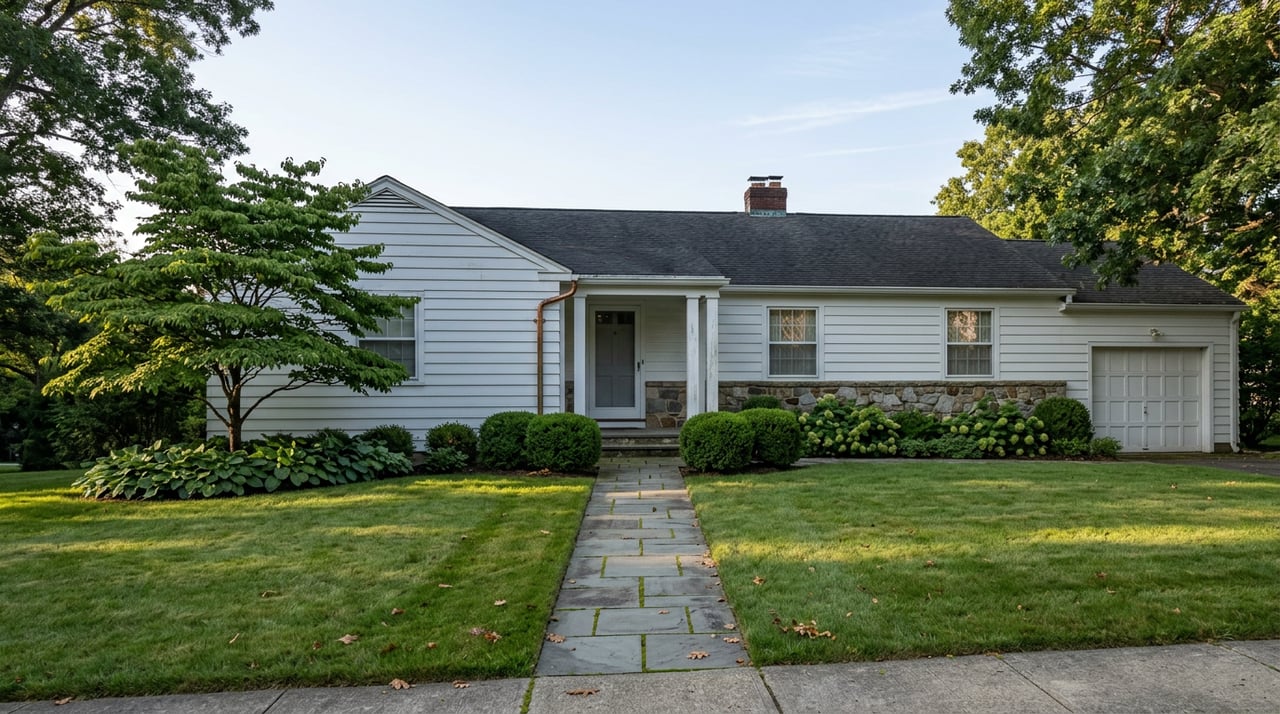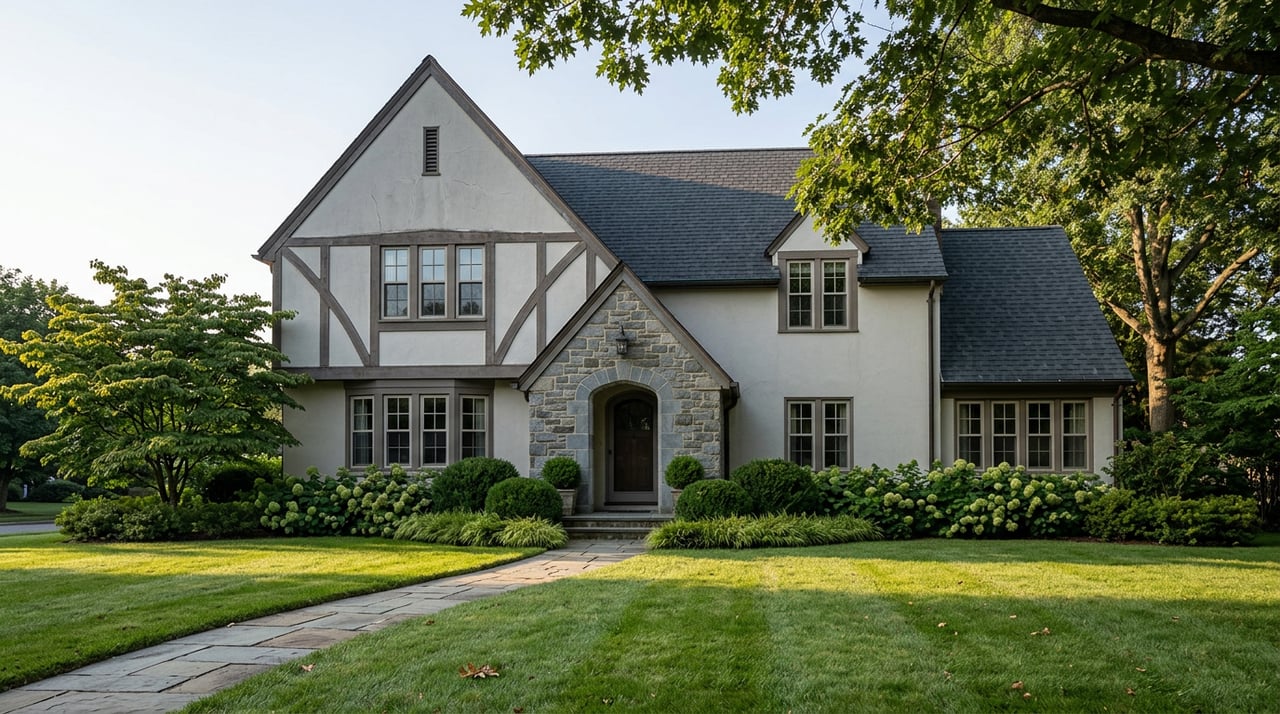
Roughly half of Larchmont's homes were built before 1939, which puts the village's housing stock among the oldest in the country. That fact by itself is a selling point on brochures: character, pedigree, a walkable village that predates the automobile-first suburb. It is also the reason a specific due-diligence question follows an unusually high share of Larchmont transactions, one that has nothing to do with the kitchen, the roof, or the schools. It is buried under the lawn, and it was standard equipment in exactly the era that built most of this village.
That question is whether the home still has an underground heating oil tank, and if so, whether anyone can prove what happened to it.
Half the Village, One Era
According to the most recent local housing count, Larchmont's housing stock breaks down heavily toward older construction: just under half the homes date to before 1939, and another third were built between 1940 and 1969. Put those two brackets together and you get roughly four out of five homes in the village built before 1970.
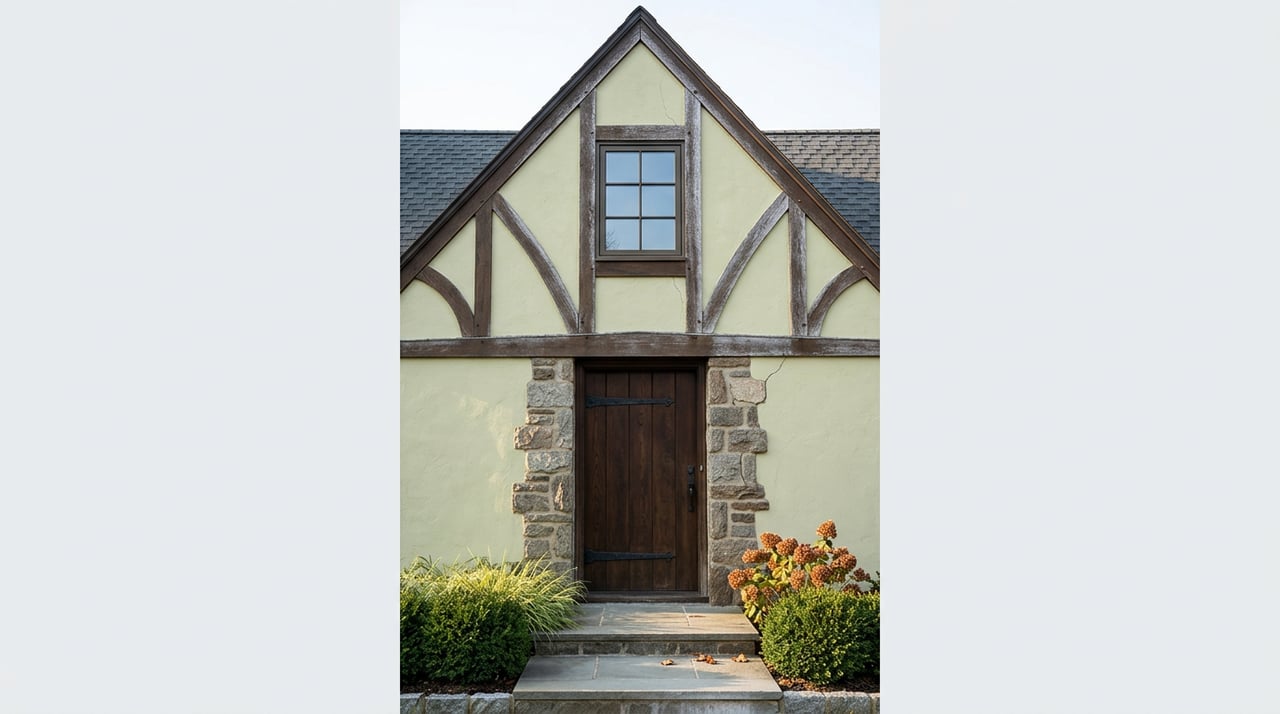
That range matters because it overlaps almost exactly with when underground steel oil tanks were the default heating setup across New York. Statewide, millions of these tanks went into the ground between 1940 and 1990, before natural gas infrastructure caught up to demand. Larchmont's oldest sections carry that history in their architecture as much as their utilities: Larchmont Manor, platted in 1872 as a summer resort and now known for its mix of Gothic cottages, Queen Anne and Shingle Style homes, and Colonial Revivals; the Craftsman bungalows of the California Bungalow Community, built to designs drawn from a California pattern book; the Tudor Revivals scattered through Bonnie Briar and Pine Brook. Different architects, different decades, same underlying fact. Almost all of them were built with an oil burner and, more often than not, a buried steel tank to feed it.
None of this means every old Larchmont home has a tank sitting undiscovered in the yard. Plenty were converted to gas decades ago with the tank properly removed and documented. The point is narrower: in a village this old, "does this property have a tank question" is not a rare edge case an inspector stumbles into. It is close to a coin flip, and the paperwork trail is often thin or missing entirely.
How a Tank Actually Surfaces
A standard home inspection will not answer this question. Inspectors work visually and non-invasively, and a buried tank, by definition, is neither. What they can flag are the physical tells: a capped fill pipe or vent pipe near the foundation, two small pipes poking out of the lawn, abandoned copper fuel lines in the basement, an old oil burner switch with nothing left to switch, a patched section of foundation wall, or a slight depression in the yard where soil settled over a void.
Confirming or ruling out a tank takes a separate step: a tank sweep using ground-penetrating radar or electromagnetic detection, sometimes followed by soil sampling if the sweep turns something up. That step is usually initiated by the buyer, during the inspection contingency period, which means the question often gets answered for the first time after the house is already under contract. That is the timing problem. The seller who assumed the tank issue was settled discovers otherwise on the buyer's clock, not their own.
The Lender Problem Nobody Mentions at the Open House
A tank that has never leaked can still stop a mortgage.
Most conventional lenders, along with FHA and VA programs, will not approve financing on a property with a known underground storage tank until it has been removed and the soil has been tested clean. Escrow holdbacks, where funds are set aside at closing to cover future removal, still exist on paper but have become the exception rather than the rule. For a buyer relying on financing, a tank discovered mid-contract is not a repair request. It is a potential loan denial.
Removal itself is not the expensive part in most cases. A standard residential tank removal in New York, including permitting, typically runs $2,200 to $4,500. Contamination, if it turns up, changes that math substantially and is priced separately once the scope is known. In villages like Larchmont, where unaddressed tanks have already drawn caution from area lenders, the real cost isn't the invoice. It's the calendar.
Two Paths, One Clock
Local practice around this has never fully settled into one right answer. Some sellers address it before listing: order the sweep, remove or test the tank, and walk into negotiations with paperwork in hand. Others take the position that testing is the buyer's expense and their choice, and decline to touch it unless a buyer's inspection asks for it. There's a long-running local anecdote about a Larchmont seller whose homeowners policy included an oil tank endorsement, and when the old tank came out looking like it had been eaten from the inside, the policy covered a full replacement in the neighborhood of $5,000. Many buyers in that situation ask to convert to gas rather than reinstall another oil tank at all.
Both approaches can work. The difference is who controls the timeline when something turns up.
| Approach | Who sets the timeline | Upfront cost to the seller | Where it can still go sideways |
|---|---|---|---|
| Sweep or remove before listing | The seller | Roughly $2,200 to $4,500 if removal is needed | Contamination discovered during a seasonal contractor rush, still on the seller's schedule |
| Wait for the buyer's inspection period | The buyer's contract clock | Little to none unless findings require action | Mid-contract discovery can stall financing and reopen price negotiations |
New York's disclosure framework leans toward buyer diligence rather than mandatory seller disclosure of unknown conditions, which is exactly why a tank with no paperwork tends to become the buyer's problem to chase down, usually under time pressure, usually with an attorney now involved on both sides.
Why This Fall Is a Bad Time to Find Out
Tank sweep and removal demand in New York rises every spring and fall, the two seasons when the largest share of homes come to market. Contractor waitlists lengthen accordingly. A seller who lists in September and gets a tank sweep request from a buyer's inspector in October is now competing with every other Westchester seller who hit the same seasonal wall, often with a mortgage contingency deadline that doesn't care whose calendar is fuller.
That timing pressure is exactly what a seller avoids by resolving the question before the listing goes live, when there's no contract clock running and no other party's financing deadline attached to the outcome.
What This Actually Means If You're Selling This Season
If your Larchmont home was built before 1970, and especially if it sits in one of the village's older pockets like Larchmont Manor, Pine Brook, Bonnie Briar, or the California Bungalow Community, the tank question is worth answering before it's asked. Pull whatever paperwork exists: a removal invoice, a closure letter, anything from a prior owner's file. If nothing exists, a sweep is a modest expense compared to what a mid-contract surprise costs in time and leverage. It converts an unknown into a known, and knowns are easier to price into a listing than they are to negotiate under deadline pressure.
For buyers, the same logic runs in reverse. A clean answer on the tank question, documented before you're deep into a mortgage commitment, is worth asking for directly rather than assuming the inspection covers it. It usually doesn't.
A Few Questions This Raises
Does New York require sellers to disclose a known tank? New York's residential disclosure framework puts more of the burden on buyers to investigate than some other states do, and sellers commonly opt out of the standard disclosure form entirely in favor of a small statutory credit. That makes independent verification, not the disclosure form, the more reliable path to an answer.
What if a previous owner already removed the tank but there's no paperwork? This is common in homes that have changed hands more than once since a 1970s or 1980s gas conversion. A tank sweep can usually confirm the tank is gone even without records, which is often enough to satisfy a lender, though a formal closure letter from the original removal is the stronger documentation if it can be tracked down through old permit files.
Does an above-ground tank avoid all of this? Above-ground tanks carry their own inspection and insurance considerations, but they don't raise the same financing and soil-contamination questions that come with something buried and unverifiable. Many buyers converting away from oil heat prefer to skip reinstalling either type.
Larchmont's older homes are a large part of what makes the village worth buying into. The oil tank question is simply the maintenance history that comes attached to that character, and it answers itself far more easily on a seller's schedule than on a buyer's deadline. If you're weighing a sale in one of Larchmont's older sections and want a straight read on how this factors into pricing and timing, Andrew Rogovic offers a free home valuation that accounts for exactly this kind of local detail.