A buyer under contract on a home in Purchase spends weeks worrying about a tax bracket that will never touch their closing. A buyer under contract for a smaller property a few miles away in West Harrison spends those same weeks not realizing that ten thousand dollars is riding on a single number in the purchase agreement. Both of them read the same generic explainer online. Neither explainer was written with Harrison in mind.
New York's so-called mansion tax gets discussed almost entirely through a New York City lens: a ladder of rates climbing from 1 percent to 3.9 percent, listings priced at $2,999,000 to dodge a bracket, attorneys negotiating over a single dollar that can cost tens of thousands. None of that ladder exists once you cross the city line. In Harrison and the rest of Westchester, the tax is flat. One rate, one threshold, and the entire strategic game that dominates Manhattan closings simply does not apply here in the way most people assume.
What the tax actually does outside the five boroughs
New York created the mansion tax in 1989 as a flat 1 percent charge on residential sales of $1,000,000 or more. In 2019, the state layered seven additional brackets on top of that base rate, climbing as high as 3.9 percent on the priciest deals. Those escalating brackets apply only inside New York City. Everywhere else in the state, including every corner of Harrison, the tax stayed exactly what it was in 1989: a flat 1 percent on any residential sale at or above $1,000,000.
That distinction changes the math entirely. In Manhattan, a buyer moving from a $2,999,999 contract to $3,000,001 watches the rate itself jump from 1.25 percent to 1.5 percent, and the tax bill jumps by thousands for two dollars of price. In Harrison, there is no second bracket to fall into. Cross $1,000,000 and the rate is 1 percent whether the sale price is $1,000,001 or $8,000,000. There is exactly one cliff in this market, and it sits at exactly one million dollars.
Outside New York City, the mansion tax is not a ladder. It is a single step at one million dollars, and nothing above that line changes the rate.
The tax is paid by the buyer at closing, filed through the attorney handling the transaction, and it applies to one-, two-, and three-family homes, condominium units, and cooperative shares. It has nothing to do with the seller's separate New York State transfer tax, a 0.4 percent charge on most residential sales that the seller typically covers regardless of price. The two taxes get confused constantly because they both show up on the same closing statement, but only one of them cares whether you crossed seven figures.
Two Harrisons, and only one of them lives near the line
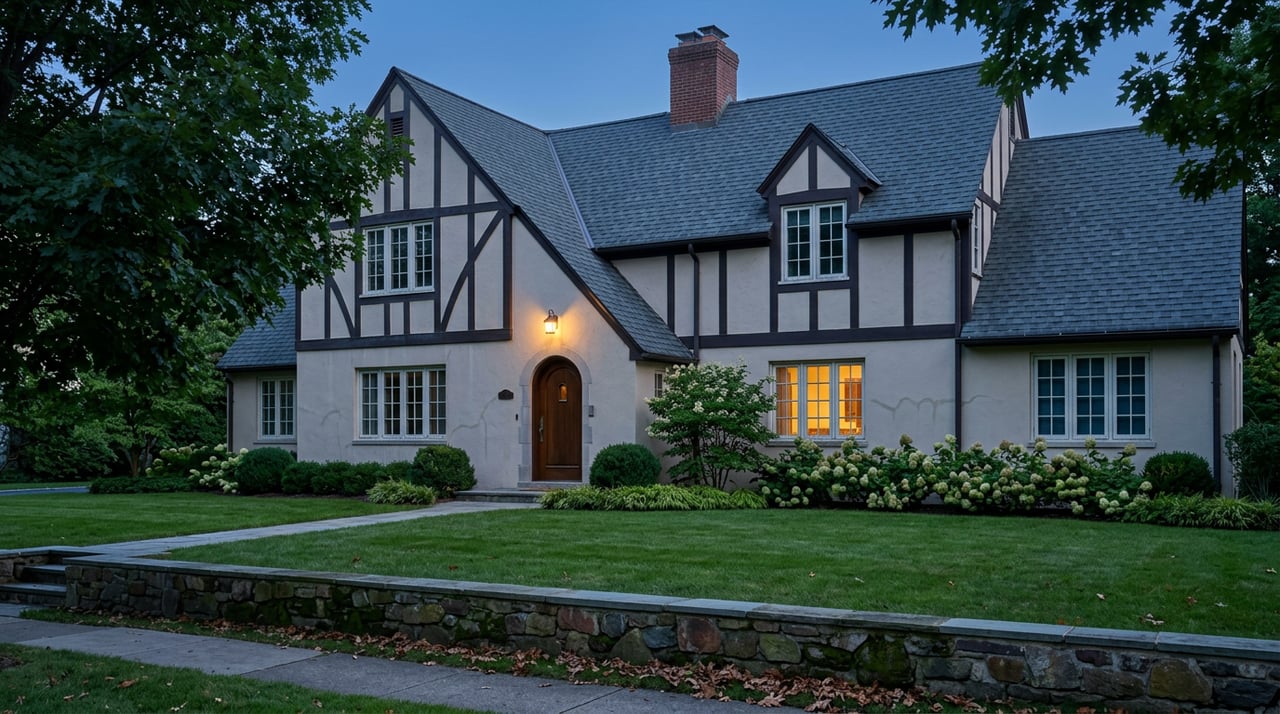
Harrison's own market makes this concrete in a way that a generic explainer never could, because the town is really two housing markets that happen to share a name.
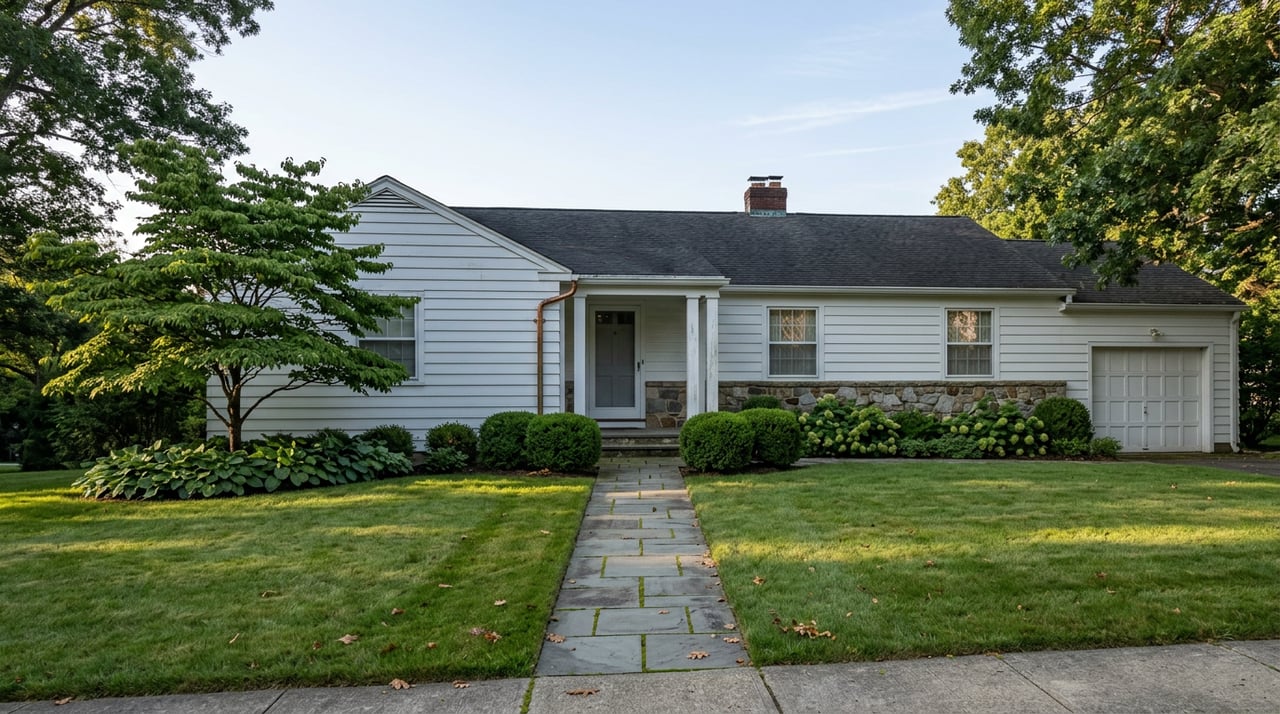
Sales data through February 2026 put the median sale price in West Harrison at $765,000, down 15.6 percent from a year earlier, with homes taking an average of 43 days to sell compared to 30 days the year before. A separate snapshot from August 2026 showed the West Harrison median closer to $799,000, with active listings ranging from $989,900 up to $3,250,000 and an average sale price of $1,956,000, a gap between median and average that tells you a handful of larger sales are pulling the top end skyward while most of the neighborhood transacts well under the seven-figure mark.
Zoom out to Harrison as a whole and the picture shifts. Townwide, the February 2026 median sale price was $1.1 million, down 2.8 percent year over year, with homes sitting on the market for 47 days on average compared to 30 days the previous year. A separate full-market read put the townwide median closer to $1.36 million. Either figure sits above the mansion tax threshold, which means a majority of Harrison sales, taken as a whole, are already paying the 1 percent.
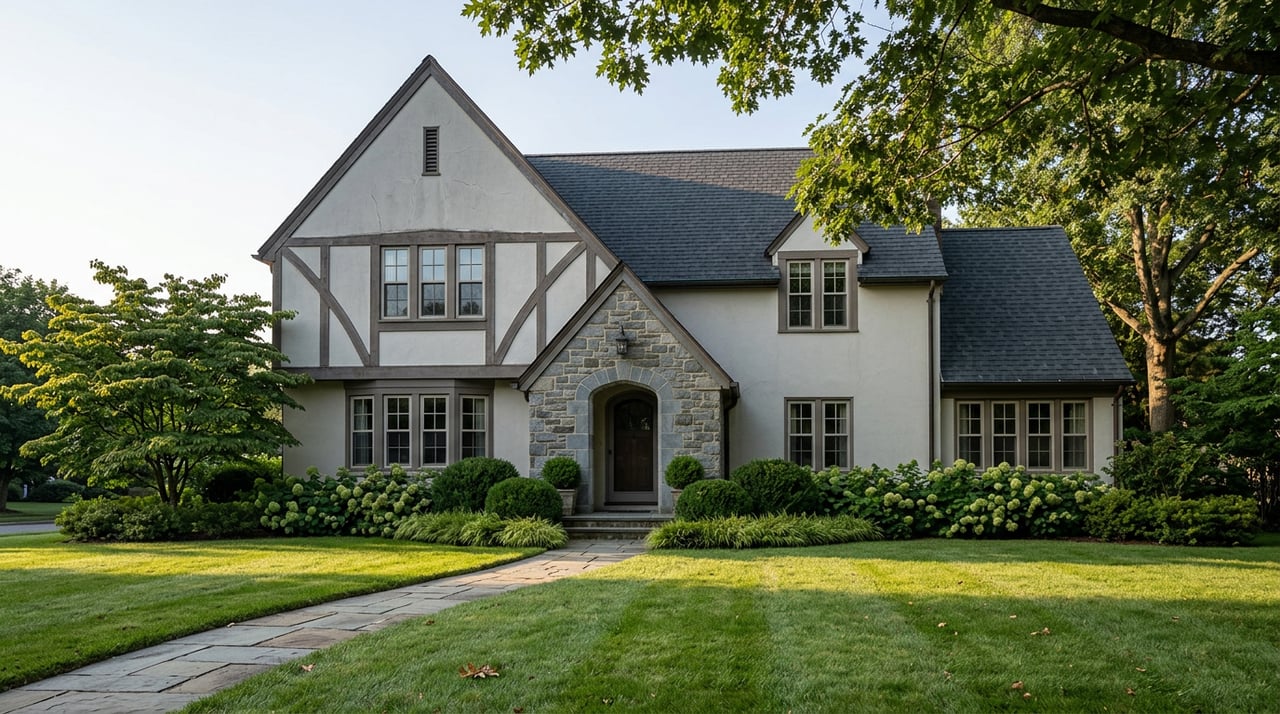
Then there is Purchase, the estate section of Harrison built around large lots, gated communities, and the corporate campuses of the so-called Platinum Mile, where PepsiCo, Morgan Stanley, and Mastercard all keep offices. PepsiCo's own headquarters sits on 144 acres landscaped by the British garden designer Russell Page, a scale that says something about the price floor for residential land nearby. As of July 2025, the median list price for a home in Purchase was $3.02 million. A more recent read across Harrison's luxury segment, as of September 2, 2026, showed 40 luxury homes on the market with a median listing price of $1.95 million and an average of 57 days on the market.
Put those numbers next to each other and the thesis becomes obvious. West Harrison is a market that lives within arm's reach of the $1,000,000 line, with entry-level listings starting under $1 million and mid-tier homes crossing it by a few hundred thousand dollars. Purchase is a market that cleared that line years ago and never looks back. The tax mechanics that matter to a West Harrison buyer are irrelevant to someone shopping Sarosca Farm Estates or Brook View Estates, where seven-figure closings are the floor, not the ceiling.
What the flat rate actually costs at different price points
Because the rate never changes above $1 million, the math is simple enough to lay out directly.
| Purchase price | Mansion tax owed |
|---|---|
| $950,000 | $0 |
| $999,999 | $0 |
| $1,000,000 | $10,000 |
| $1,750,000 | $17,500 |
| $3,000,000 | $30,000 |
A West Harrison buyer negotiating a contract from $1,010,000 down to $995,000 is not just saving $15,000 in price. They are erasing a $10,100 tax bill entirely, for a real swing closer to $25,000. That is the negotiation worth having in this part of town, and it is a conversation an attorney should walk through before the contract is signed, not after.
A Purchase buyer negotiating from $3,010,000 down to $2,995,000 saves $15,000 in price and $150 in tax. The threshold negotiation that defines so much Manhattan deal-making simply has nothing to grab onto once a sale is comfortably north of a million dollars, because there is no second rung on this particular ladder.
What this means depending on which side of Harrison you're transacting on
For a seller pricing a West Harrison home near the seven-figure mark, the tax is a market fact worth pricing around. A listing at $1,020,000 competes against listings at $985,000 partly on price and partly on the fact that the lower listing spares its buyer a five-figure tax bill outright. With days on market running higher in early 2026 than the year before, both townwide and in West Harrison specifically, sellers have less room to assume a buyer will simply absorb that cost without pushing back on price.
For a buyer working with an attorney on a West Harrison contract that lands close to $1,000,000, the conversation worth having is not about brackets. It is about the single line, what counts toward it under the state's definition of consideration, and whether any credits or included items might nudge a deal across it without anyone intending that to happen.
For anyone buying or selling in Purchase, the tax is real money but not a strategic lever. A 1 percent flat charge on a $2 million or $4 million home is a line item to budget for, the same way title insurance or a survey fee is a line item, not a threshold to engineer a contract around.
A few questions this raises
Does the mansion tax apply to co-ops the same way it applies to single-family homes? Yes. A cooperative apartment transfer is technically a transfer of stock plus an assignment of a proprietary lease, but for mansion tax purposes it is treated as a residential conveyance subject to the same $1,000,000 threshold and the same flat rate outside New York City.
Could the flat 1 percent rate outside New York City change? Legislative proposals floated in Albany's spring 2026 budget season targeted a restructured mansion tax and a separate annual surcharge on high-value second homes, but both proposals applied specifically to New York City and neither passed. As of this writing, the rate structure outside the city, including everywhere in Westchester, remains what it has been since 2019.
Is the mansion tax the same thing as my annual property tax bill? No. It is a one-time charge paid at closing, unrelated to the recurring property tax bill a homeowner pays every year regardless of when they bought.
Every closing in Harrison carries its own small print, and the mansion tax is one line item where the online explainers get the mechanics wrong for this market more often than they get them right. If you are pricing a listing near that line or trying to understand what a contract price actually costs at closing, Andrew Rogovic at RyebrookRealtor.com has walked Harrison buyers and sellers through exactly this math. Request a free home valuation to see where your property actually sits relative to the line, and what that means for your closing statement.