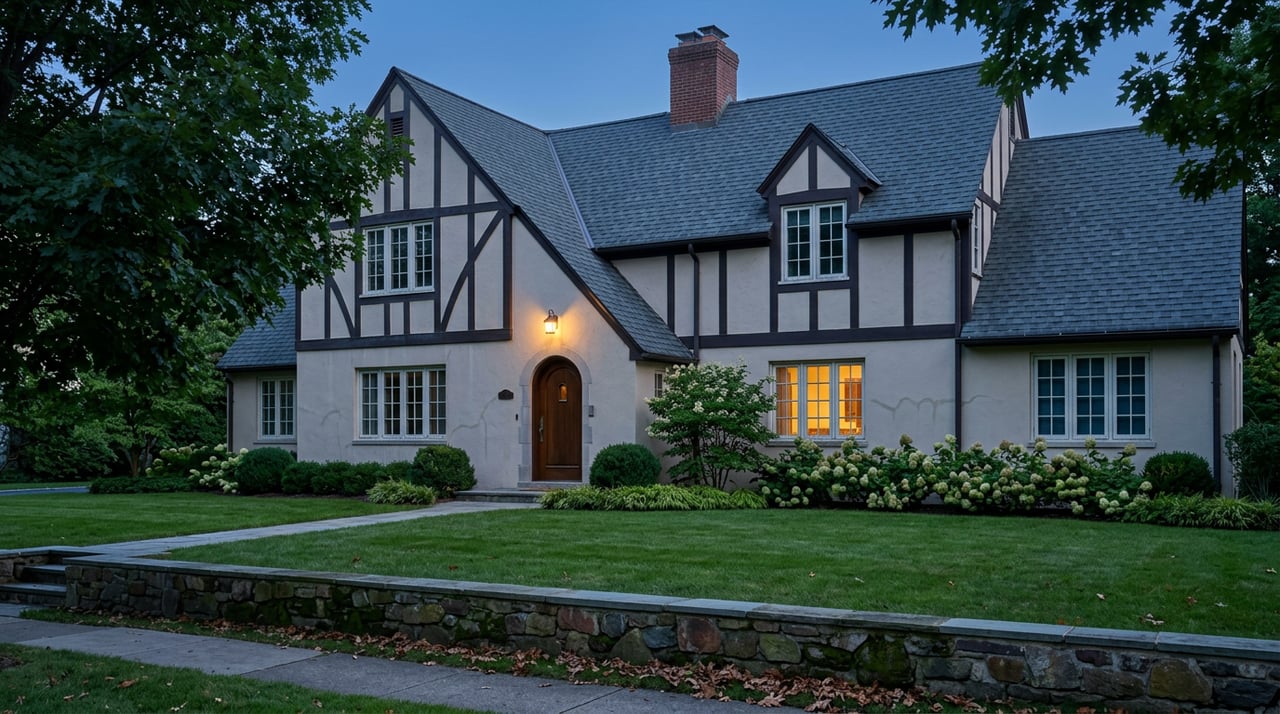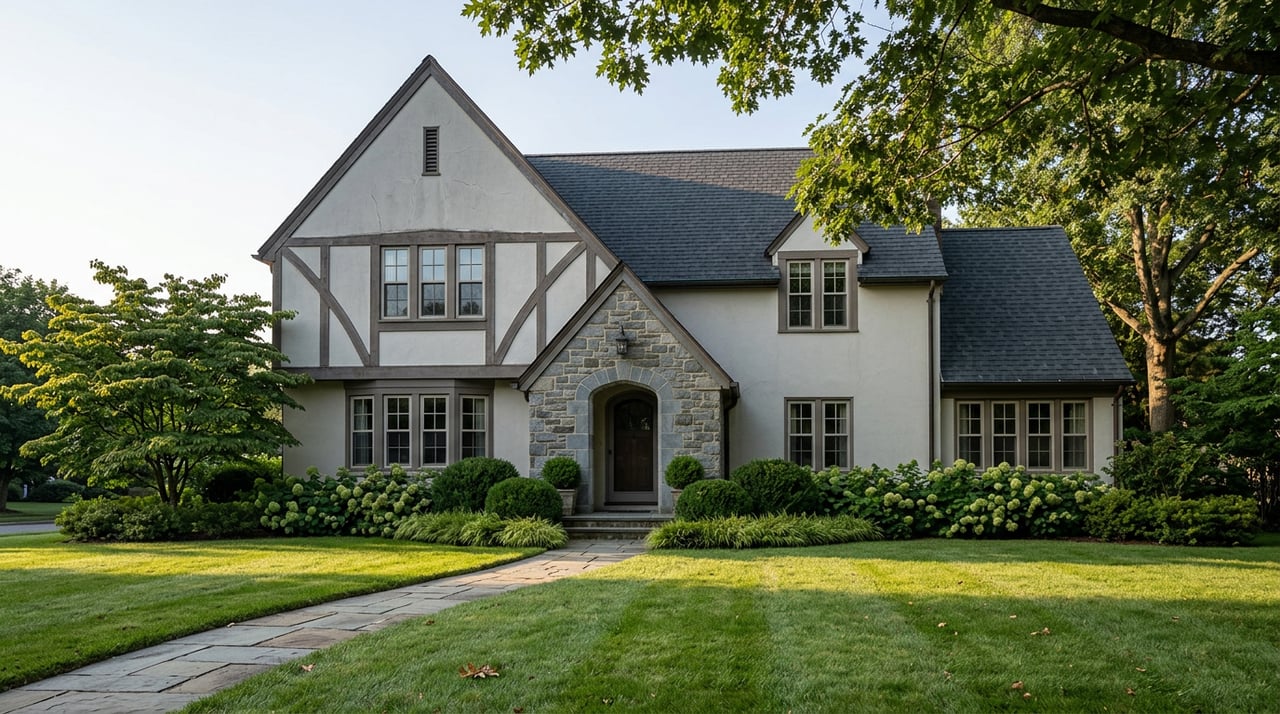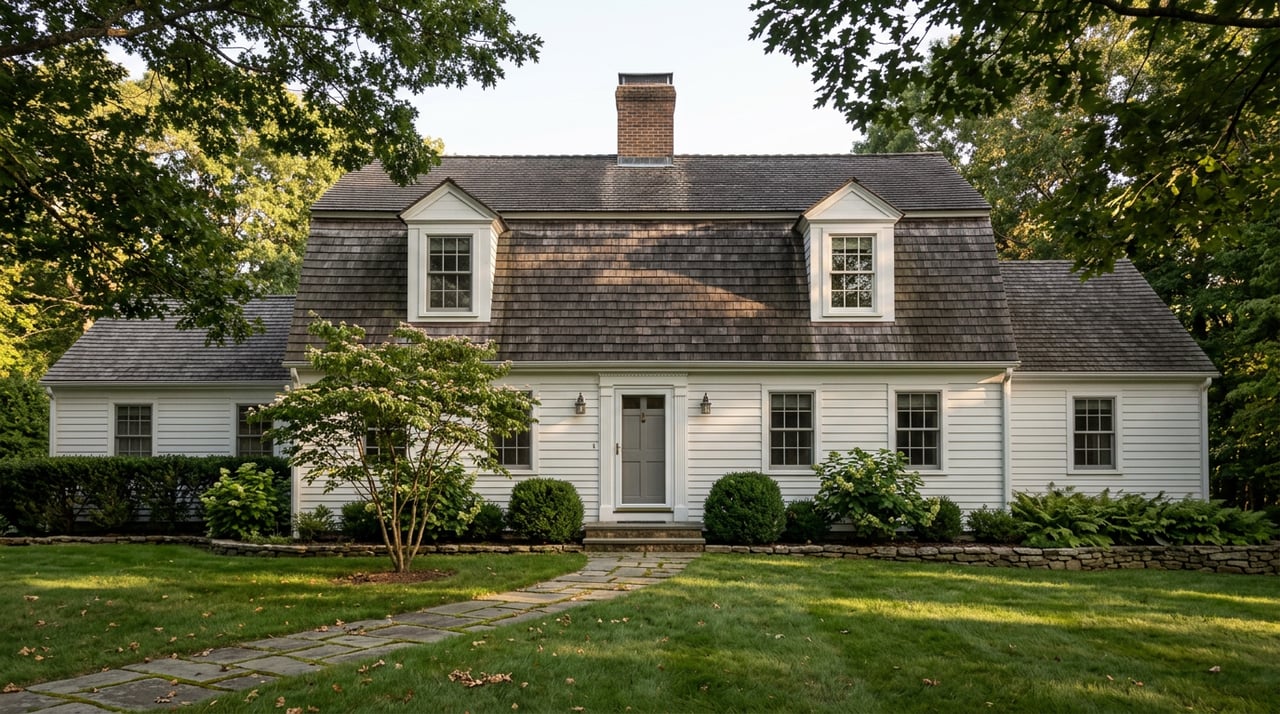
Two houses on the same Scarsdale street. Same square footage, same lot size, same school zone. One sold eighteen months ago in a bidding war. The other has been owned by the same family since the Ford administration. Ask a buyer to guess which one carries the higher tax bill and most will say the recently sold house, since that's the one with a documented market price attached to it.
They would be wrong more often than they think, and the reason has nothing to do with either house. It has to do with a number buried in the village's own paperwork: 66.91.
What the village's own roll admits
Scarsdale's Village Assessor states plainly that the goal of the assessment system is to value homes at full market value, meaning the number on your tax bill should track what the house would actually sell for, not a fraction of it. That is the official position, and it shapes how the whole system is supposed to work.
But the 2026 Tentative Assessment Roll, the actual document filed with Westchester County that sets the basis for this year's taxes, lists a Uniform Percent of Value of 66.91 percent. In plain terms, the village's own filing is telling New York State that assessments across Scarsdale currently sit at roughly two-thirds of true market value, not the full value the assessor's office says it targets.
That gap did not appear overnight, and it is not evenly distributed. It is the residue of a specific decision Scarsdale made over a decade ago, and it explains why a house's assessed value and its market value can drift so far apart that neighbors end up paying meaningfully different effective rates on nearly identical homes.
How the gap opened
Scarsdale conducted a villagewide revaluation in 2014, contracting with Tyler Technologies and CLT Appraisal Services to rebuild the assessment roll using a computer assisted mass appraisal system. The new values were implemented on the June 2014 tentative roll, finalized that September, and became the basis for taxes levied the following year. A second pass followed in 2016, after residents pushed back on how the 2014 numbers had spread the burden across larger and smaller homes. It was the kind of project towns do to reset the clock, so that assessed value and market value start back at parity.
Since that 2016 reset, Scarsdale has operated as what the state calls a non reassessment municipality, meaning individual parcels only get revisited when a building permit is pulled, an addition goes in, or a homeowner files a formal grievance. There is no annual market wide adjustment sweeping through and updating every roll to match the current market. The village's own assessment guidance describes the process as one that relies on "common data, standardized methods and statistical testing" applied consistently across parcels, not on repricing each home to its most recent sale.
That distinction matters more than it sounds. State rules do not allow an assessor to reset a single parcel's value just because it changed hands. A home that sold for $2.1 million last spring does not automatically get assessed at $2.1 million this year. Its value is set by the same mass appraisal model applied to every other parcel on the block, a model last recalibrated townwide a decade ago. Meanwhile, home prices across Scarsdale kept climbing. The result, a decade on, is a roll where the average assessment has fallen to about two thirds of what homes are actually worth, unevenly, since the model treats renovated homes, newly built homes, and untouched homes differently even when they sit on the same street.
What actually shows up on the bill
A Scarsdale tax bill is not one number. It is the sum of three separate levies, each set by a different governing body:
| Levy | Who sets it | Typical share of the bill |
|---|---|---|
| Scarsdale Union Free School District | School board | Largest portion, by a wide margin |
| Village of Scarsdale | Village Board of Trustees | Funds police, fire, public works |
| Westchester County | County government | Smaller, countywide share |
There is a structural detail here worth pausing on, because it separates Scarsdale from most of its neighbors. Scarsdale is one of only three municipalities in Westchester County, along with Harrison and Mount Kisco, where the town and the village are coterminous, meaning they share the exact same boundaries and are run by a single government. Under New York's standard village structure, when a village incorporates inside a town, its residents remain taxpayers of that town and typically see a separate town tax line on top of the village levy. Rye Brook sits inside the Town of Rye. Port Chester does too. Larchmont sits inside the Town of Mamaroneck. Scarsdale does not sit inside anything. Its village government is its town government, so there is no separate town levy layered onto the bill the way there is in a standard incorporated village.
That is a genuine structural savings, one less taxing jurisdiction to fund, but it does not offset the assessment gap described above. It simply means the bill you're comparing has one fewer line item than a comparable house a few towns over, which is exactly the kind of detail that gets lost when buyers compare total tax bills across Westchester villages using headline rates alone instead of the actual jurisdictions doing the billing.
The one week that decides your leverage
Here is where the timing becomes a real transaction issue rather than a curiosity. New York State fixes Scarsdale's grievance window by statute: the formal review period runs from June 1 through the third Tuesday in June, and a completed Form RP-524, along with supporting evidence of value, must reach the Assessor's Office by the close of that day. Miss it, and the deadline for that assessment year has passed. There is no late filing.
The Board of Assessment Review considers every properly filed grievance and issues a determination, generally by September 15, when the final roll is published. If the outcome is unsatisfactory, an owner occupant of a one to three family home can file a Small Claims Assessment Review petition in Westchester County Supreme Court within 30 days of that final roll, electronically through NYSCEF, for a $30 filing fee. Beyond that, a formal Article 7 tax certiorari proceeding is available, though that route typically calls for an attorney.
For a buyer, the practical consequence is this: if your closing falls anytime after the third Tuesday in June, you have missed that year's entire window. You inherit whatever assessment is sitting on the roll, favorable or not, and you carry it for the better part of a year before you get another shot at challenging it. A house that closes in July arrives with an assessment set months earlier, based on data collected long before your name was on the deed, and there is nothing you can do about it until the following June rolls around.
A few things worth checking before you write an offer, or before you list:
- Pull the parcel through the Town/Village of Scarsdale's Property Record Online System and compare the current assessed value against recent comparable sales, not against the list price.
- Ask when that specific home's assessment was last adjusted. A recent addition or renovation may have triggered a fresh look. A home untouched since the 2016 reval may not have.
- Confirm which exemptions currently apply. STAR and other exemptions are tied to the owner occupying the home as a primary residence, and they do not transfer automatically to a new buyer. Basic STAR reduces school taxable value by $30,000 for owners under the applicable income threshold, and Enhanced STAR offers a larger reduction for owners 65 and older within that year's income limit. A new owner has to apply again.
- If the numbers suggest an over assessment, mark the calendar for the following June. There is no way to retroactively claim a missed year.
None of this is tax advice, and figures on any specific parcel should be confirmed directly with the Scarsdale Assessor's Office before you rely on them in a negotiation.
What this means heading into fall
Scarsdale's market has stayed tight through 2026, with limited inventory and homes moving quickly once they list. In a market like that, the temptation is to focus entirely on price and let the tax line sit unexamined until the first bill arrives. The village's own roll is a reminder that the two numbers, sale price and assessed value, are not the same conversation, and the gap between them can run wider than most buyers expect walking into a closing.
A few quick questions this raises
Does buying a Scarsdale home reset its assessment to my purchase price? No. State rules bar assessors from adjusting a single parcel's value based only on its most recent sale price. Your home is valued using the same mass appraisal model applied to every other parcel, which is exactly why two similarly priced homes can carry different assessed values depending on when each was last reviewed.
What happens if I close right after Grievance Day? You take on the assessment as filed and wait for the next cycle. The window reopens the following June 1 and closes again on the third Tuesday of that month.
Do exemptions like STAR carry over from the previous owner? No. Exemptions are tied to owner occupancy of a primary residence, and a new owner needs to file again rather than assume the previous owner's benefit continues.
If you're weighing a purchase or a sale in Scarsdale and want the actual numbers on a specific address, from what the roll currently says to what the grievance timeline looks like for your closing date, Andrew Rogovic at RyebrookRealtor.com can walk through it with you. Request a free home valuation and get the picture before you're locked into a full tax cycle you didn't plan for.